## DPR Plenary Formally Elevates Legislative Procedures Bill to Initiative Status
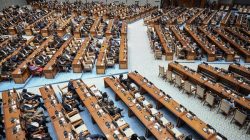
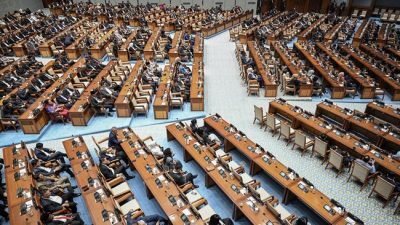
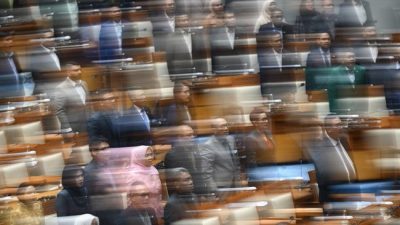
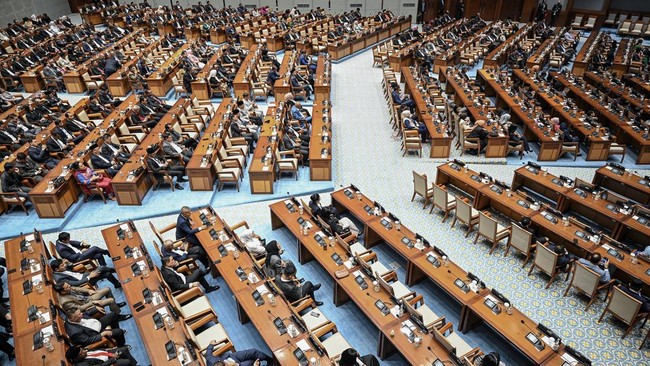
In a significant procedural step for Indonesia’s legislative framework, the 12th Plenary Meeting of the House of Representatives (DPR) for the second session of 2026–2027 formally designated the Bill on Procedures for the Formation of Laws as a DPR initiative proposal. The decision was taken on Tuesday, 17 November 2026, marking the transition of the draft from a proposal of the Legislative Body (Baleg) into an official House initiative.
The bill had already undergone preparatory discussions between Baleg and the DPR Expertise Body toward the end of the parliamentary recess in early November. During the plenary, Deputy Speaker Sufmi Dasco Ahmad, who chaired the session, put the matter to the floor, asking members whether the Baleg-proposed bill on the procedures for forming laws could be approved as a DPR initiative. The House gave its consent, completing the formal elevation of the draft.
## Next Steps After Becoming a DPR Initiative
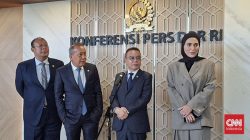
Baleg Chairman Bob Hasan explained that once the bill holds initiative status, Baleg will await the government’s submission of a presidential letter (Surpres) together with the inventory of problems (DIM). Only after these documents arrive can formal deliberative discussions between the legislature and the executive begin. This sequence follows the established pathway for initiative bills that require government input before detailed article-by-article negotiation.
## Constitutional Basis and Open Cumulative Status

Deputy Baleg Chair Martin Manurung of NasDem clarified that the bill qualifies as an open cumulative matter under a Constitutional Court (MK) ruling. Because of that status, it may be deliberated even though it does not appear on the DPR’s regular National Legislation Program agenda.
The relevant court decision is MK ruling Number 81/PUU-XXIII/2025, issued on 17 September 2025 in connection with the revision of the Indonesian National Armed Forces Law (Law Number 3 of 2025). In its ruling, the Court interpreted Article 22A of the 1945 Constitution to mean that the procedures for forming statutes must be regulated specifically in a stand-alone law rather than being embedded within broader legislation that also covers other types of regulations.
Manurung underscored that the new bill is therefore distinct from Law Number 12 of 2011 on the Formation of Legislation (commonly known as the PPP Law), which has long served as the general reference for drafting laws in the DPR. The Constitutional Court explicitly directed that the formation of statutes be governed by a dedicated law, separate from the rules applying to government regulations, regional regulations, and other subordinate instruments.

## Fast-Track Provisions Without Sacrificing Formal Requirements
In the first Baleg meeting on the draft held on 3 November, Chairman Bob Hasan stated that the bill would introduce a fast-track or accelerated mechanism for preparing legislation. He stressed, however, that speed would not come at the expense of formal requirements. Meaningful public participation and both formal and material conditions for law-making would remain intact. The objective, he said, is to design a process that shortens timelines while still satisfying the constitutional and procedural standards that give legislation its legitimacy.
## Structure and Relationship to Existing Legislation

Head of the DPR Expertise Body Bayu Dwi Anggono provided further technical detail, noting that the draft consists of 12 chapters and 92 articles. Once enacted, the new law is expected to become the primary reference for the drafting of statutes. The existing PPP Law would continue to govern the formation of regulations below the level of statutes.
Of the 92 articles, 21 are drawn from the current PPP Law, while the remaining 71 introduce new material. This division reflects the Constitutional Court’s instruction to isolate statute-making rules in a dedicated instrument while preserving the PPP Law’s role for subordinate regulations.
## Broader Institutional Implications
By establishing a specialized legal framework for the formation of laws—including provisions for accelerated handling—the DPR is responding directly to the Constitutional Court’s interpretive guidance. The move creates a clearer hierarchy: a dedicated statute for parliamentary law-making on one hand, and the continuing PPP Law for lower-level regulations on the other. Officials involved emphasize that any fast-track route will still incorporate the formal safeguards and participatory elements required for valid legislation, aiming to balance efficiency with constitutional compliance.
The bill now awaits the government’s Surpres and DIM before entering the formal deliberation phase, the next concrete stage in converting the initiative into enacted law.