## Global Index Decisions Weigh on Indonesian Equities
Investor attention in Indonesia’s stock market remains fixed on recent signals from major global index providers, even as broader themes such as central-bank interest-rate policy and geopolitical developments at home and abroad continue to shape sentiment. Two developments in particular are drawing scrutiny: the prospect that MSCI could reclassify Indonesia as a “Standalone Market,” and FTSE Russell’s decision to remove 14 Indonesian stocks from its global index.
These moves have added another layer of caution for market participants who already monitor monetary-policy shifts and political risk. The combination has kept questions about market accessibility, liquidity, and regulatory consistency high on the agenda for both domestic and international investors.
## Fund-Manager Perspective on Index Scrutiny
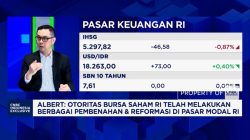
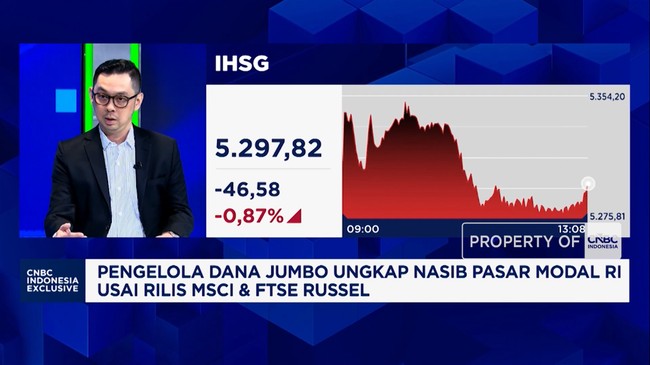
Albert Z. Budiman, Chief Investment Officer at UOB Asset Management Indonesia, has underscored that assessments by MSCI and FTSE Russell continue to be closely watched by equity-market investors. In his view, the spotlight cast by these index providers means that concrete improvements and firm follow-through on the issues they have raised are necessary if market confidence is to be reinforced.
The remarks reflect the perspective of a large-scale asset manager on how global benchmark decisions affect perceptions of Indonesia’s capital market. Budiman’s comments were delivered in a discussion with Aulia Wardhani on CNBC’s Power Lunch program on Monday, 16 November 2026, offering insight into how institutional investors interpret and respond to index-related developments.
## Implications for Market Confidence and Policy Response
The dual pressure from a potential MSCI status change and the FTSE Russell exclusions highlights the importance investors place on index inclusion and classification. Such decisions influence passive fund flows, portfolio construction, and the broader narrative around market depth and governance. Against this backdrop, calls for remedial steps and decisive action on the concerns flagged by the index providers point to an expectation that authorities and market stakeholders will address the underlying issues in order to support investor conviction.
While interest-rate trajectories and geopolitical factors remain part of the wider backdrop, the index-related developments have emerged as a distinct and persistent focus. How Indonesia’s market participants and policymakers respond to the points raised by MSCI and FTSE Russell will likely continue to shape near-term sentiment and the longer-term positioning of the country’s equities within global portfolios.
*Source context: Reporting from Jakarta, CNBC Indonesia, 16 November 2026.*