## Parliament Flags Persistent KTP Photocopy Demands Despite Biometric Population Data
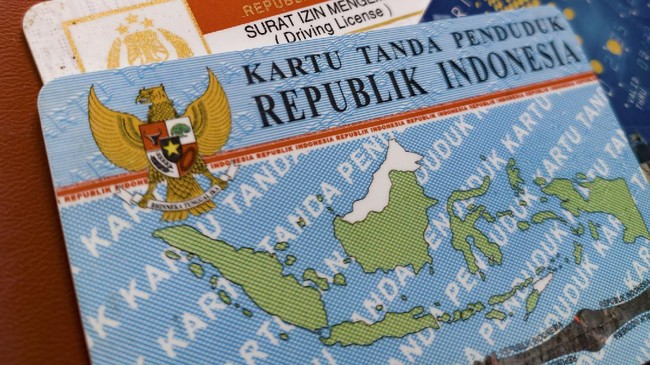
Jakarta — Commission II of the House of Representatives (DPR) has drawn attention to a long-standing gap in Indonesia’s population administration system: citizens are still routinely required to submit photocopies of their electronic identity cards (e-KTP) when handling administrative matters, including banking services. Lawmakers argue this practice runs counter to the purpose of national biometric recording that has been in place for more than a decade.
Since the early 2010s, population data collection has incorporated facial recognition and fingerprint recording. Those features were introduced to simplify administrative processes and reduce reliance on physical document copies. Yet, according to lawmakers, many public and private institutions continue to demand paper photocopies of the e-KTP.
## NIK and Biometric Data Should Enable Integrated Public Services
Commission II Chair Rifqinizamy Karsayuda underscored that every resident already holds a Population Identification Number (NIK). In principle, that number—linked to facial recognition and fingerprint data recorded by the Directorate General of Population and Civil Registration (Dukcapil)—ought to support integrated verification across public services.
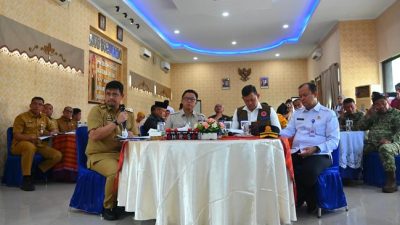
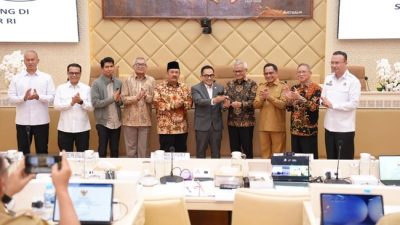
Speaking at a working meeting of Commission II at the parliamentary complex in Jakarta on Monday (16 November), Rifqinizamy described an internal account from a fellow member: despite Dukcapil already holding the relevant data, a bank still requested a photocopy of the KTP. He stressed that biometric recording tied to citizens’ NIK should already be connected to various public service systems, making repeated photocopy submissions unnecessary.
The use of facial recognition and fingerprints forms part of the broader Single Identity Number (SIN) concept—an approach built around one unified identity number for administrative use.
## Single Identity Number at the Center of the Adminduk Bill Discussion
Aria Bima, chair of the working committee (Panja) on the Population Administration Bill (RUU Adminduk), stated that the NIK held by every resident can serve as the foundation for SIN. Commission II and the government are currently discussing how to embed the SIN concept in the draft law on population administration.
Under a fully implemented SIN policy, Aria Bima explained, neither government agencies nor private entities would be permitted to request photocopies of personal documents for population-related administrative processes. Verification would instead have to proceed through digital systems.
He emphasized that any ban on requesting photocopies or screenshots must be paired with the widespread availability of digital reading devices—covering all service providers, including private sector actors and small businesses. Without such tools, a formal prohibition would be difficult to enforce in practice.
## Core Provisions Under Review in the Adminduk Bill Revision
Aria Bima also outlined the main points under discussion in the revision of the RUU Adminduk. The draft framework covers a shift toward more proactive state service delivery, stronger data integration, clearer protections for personal documents, and firmer oversight mechanisms. The key elements include:
1. An active system (stelsel aktif), under which the government is obliged to deliver services rather than wait for residents to initiate every process.
2. Use of the NIK as the Single Identity Number (SIN) for all public services.
3. Integration of the NIK through interoperability arrangements, including rules on access rights and reciprocal data obligations.
4. Utilization of integrated population data, including the electronic KTP and Digital Population Identity (IKD).
5. Protection of data and documents, including a ban on requesting photocopies or screen captures, replaced by verification via digital reading tools.
6. A non-population identity number for Indonesian citizens living abroad.
7. A child identity document as an official record for unmarried individuals under 17.
8. IKD as the digital representation of the electronic KTP and other documents.
9. Internal and external oversight, including data security.
10. Complaint channels, both direct and through a national complaint system.
11. Funding provisions drawn from the state budget (APBN), regional budgets (APBD), non-tax state revenue (PNBP), and grants to support service development.
12. Administrative sanctions for organizers and users who violate obligations related to SIAK data integration.
## Implications for Public and Private Administration
The parliamentary discussion highlights a practical tension between existing biometric infrastructure and everyday administrative habits. If the SIN framework and related prohibitions on photocopy requests are enacted and supported by digital readers across government and private operators, routine document copying could be phased out in favor of system-based verification. That shift would depend not only on legal provisions but also on the readiness of service providers—including banks and smaller businesses—to adopt digital verification tools, as stressed by the working committee leadership.
The working meeting forms part of ongoing legislative work between Commission II and the government on modernizing population administration through the RUU Adminduk, with the NIK-centered Single Identity Number concept positioned as a central pillar of the proposed reforms.