## OJK Addresses Public Concern Over Severance Pay Reserves
The Financial Services Authority (Otoritas Jasa Keuangan/OJK) has issued an official clarification regarding circulating reports on social media about the management of severance pay reserve funds, known as Dana Cadangan Pesangon (DCP). The statement aims to settle public confusion over how these funds are currently handled and how they are expected to be treated under forthcoming regulations.
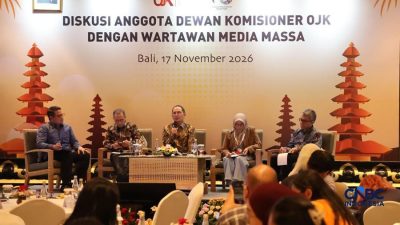
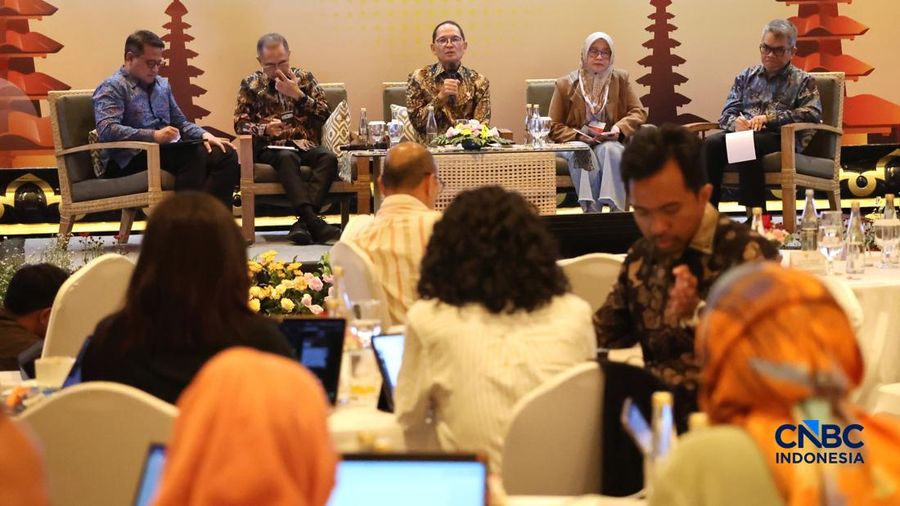
Ogi Prastomiyono, OJK’s Chief Executive overseeing Insurance, Guarantee, and Pension Fund Supervision, explained the present practice during a discussion between members of the OJK Board of Commissioners and mass media journalists in Nusa Dua, Bali, on Thursday, 17 November 2026.
## Current Practice and Preferred Placement
According to Ogi, severance reserve funds are at present retained by companies. The money is not disbursed but is recorded on the books as a severance pay reserve. In some cases, however, companies place these reserves as pension assets with a Financial Institution Pension Fund (Dana Pensiun Lembaga Keuangan/DPLK).
OJK’s preferred approach is for such reserves to be classified within the pension fund category. Management of the program, Ogi noted, could be carried out by BPJS Ketenagakerjaan, by a DPLK, or by a dedicated institution prepared by the government.
## Tax Treatment as a Key Rationale
Ogi outlined a central reason for placing DCP under the pension fund umbrella: pension funds receive a different tax incentive regime compared with ordinary funds. Grouping severance reserves with pension assets would therefore align them with that more favorable fiscal treatment and support the broader development of the pension sector.
## Legal Basis and Transition Timeline
The obligation for companies to channel severance reserve funds to the government is set out in Article 253 of Law Number 27 of 2026 on Labor Protection. The law provides a one-year transition period, with the policy targeted to take effect from the beginning of 2027.
The same law stipulates that severance funds will be managed by a special institution, the details of which will be determined through a Government Regulation (Peraturan Pemerintah/PP).
## Guarantee Program and Implementing Rules Still Pending
Ogi said discussions on DCP have already covered elements of a policy guarantee program, including initial contributions, periodic contributions, and the scope of what would be guaranteed. Even so, he urged the public to await the Government Regulation for fuller clarity, as well as an OJK Regulation (POJK) expected to be issued within six months after the PP is enacted.
One of the criteria highlighted for participation in the policy guarantee program is Risk-Based Capital (RBC).
## Push to Deepen the Pension Market
OJK is also using the DCP discussion to reinforce its push for deeper pension market development. Under the National Medium-Term Development Plan (RPJMN) for 2026–2045, pension funds are expected to contribute as much as 60 percent of GDP. Their contribution currently stands at only about 8 percent.
Without product innovation—including instruments such as the severance reserve fund—Ogi argued that reaching the 60 percent target would be difficult. He warned that, absent new products, the sector risks stagnating or even shrinking rather than expanding.
## Ministry of Manpower Position on the Managing Institution
Separately, the Ministry of Manpower has stressed that the government has not yet designated or appointed any institution to manage the Severance Pay Reserve Fund. The ministry stated that it has never indicated that Danantara would serve as the DCP manager, nor has it claimed that the ministry itself would act as the managing body.
Further operational details will depend on the forthcoming Government Regulation and the subsequent OJK rules that follow it.